Diffusion-based Curriculum Reinforcement Learning

Curriculum Reinforcement Learning (CRL) is an approach to facilitate the learning process of agents by structuring tasks in a sequence of increasing complexity. Despite its potential, many existing CRL methods struggle to efficiently guide agents toward desired outcomes, particularly in the absence of domain knowledge.
This paper introduces DiCuRL (Diffusion Curriculum Reinforcement Learning), a novel method that leverages conditional diffusion models to generate curriculum goals. To estimate how close an agent is to achieving its goal, our method uniquely incorporates a \(Q\)-function and a trainable reward function based on Adversarial Intrinsic Motivation (AIM) within the diffusion model. Furthermore, it promotes exploration through the inherent noising and denoising mechanism present in the diffusion models and is environment-agnostic.
This combination allows for the generation of challenging yet achievable goals, enabling agents to learn effectively without relying on domain knowledge. We demonstrate the effectiveness of DiCuRL in three different maze environments and two robotic manipulation tasks simulated in MuJoCo, where it outperforms or matches nine state-of-the-art CRL algorithms from the literature.
Conditional Diffusion Sampling
Captures the true manifold of visited states via continuous denoising, enabling robust exploration across complex geometries without heuristic priors.
Dual \(Q\) & AIM Conditioning
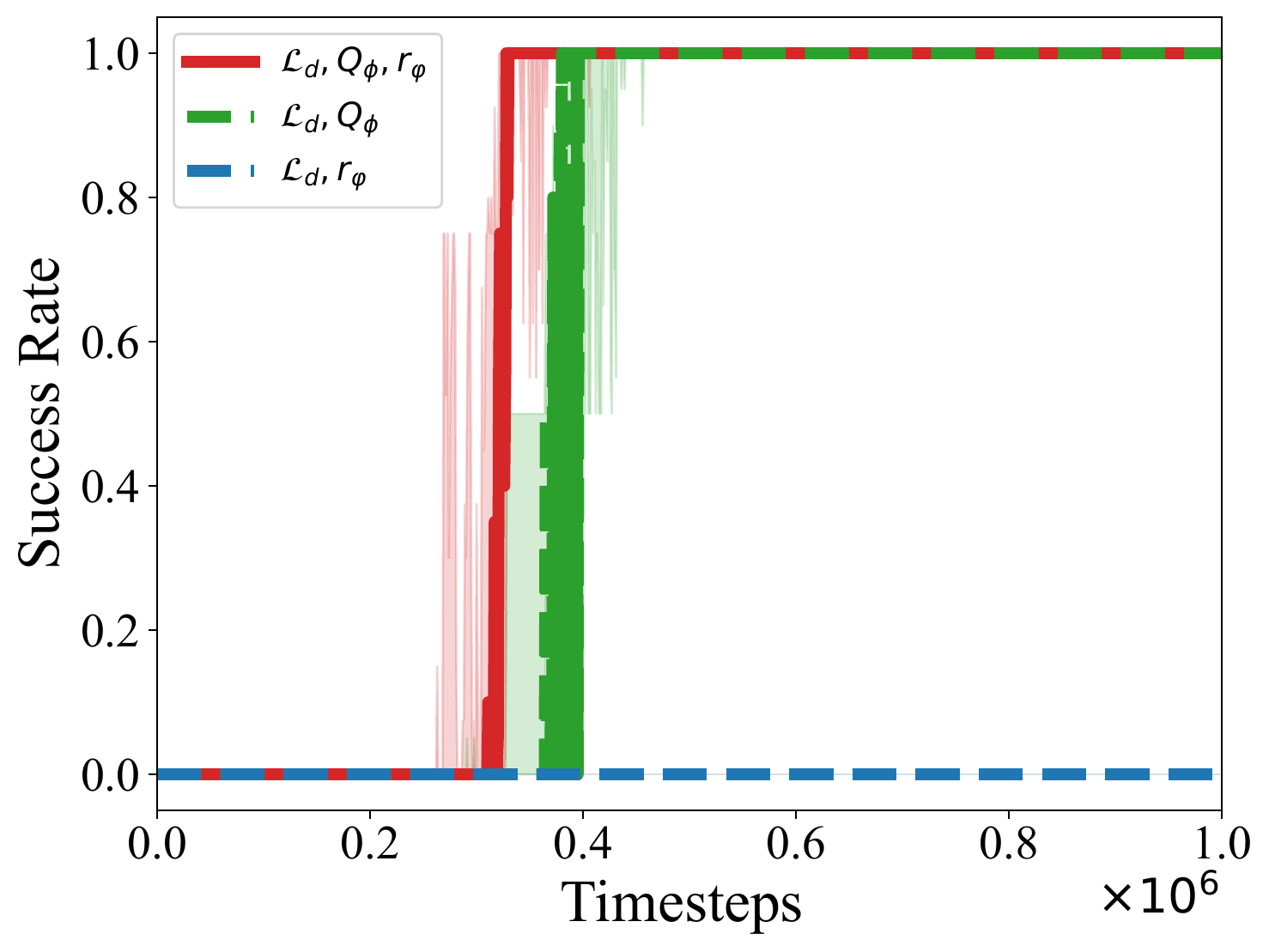
Conditions diffusion reverse steps on both the critic \(Q\)-value (ensuring feasibility) and the learned AIM potential (ensuring directional goal progress).
State-of-the-Art Performance
Outperforms or matches 9 CRL baselines across complex mazes (U-Maze, N-Maze, Spiral-Maze) and 7-DOF continuous Fetch manipulation benchmarks.
DiCuRL generates curriculum goals \(g \in \mathcal{G}_c\) by training a conditional diffusion probabilistic model on previously visited states, conditioned on state-evaluation signals:
The conditioning vector \(c\) balances two essential curriculum learning criteria:
- Critic \(Q\)-value \(Q_\phi(s, g)\): Measures policy feasibility. Conditioning on high \(Q\)-values forces the diffusion model to sample goals that are within reach of the agent's current capability.
- Adversarial Intrinsic Motivation (AIM) Reward \(r_{\text{AIM}}(s, g)\): Formulated via Wasserstein-1 distance minimization between the state visitation distribution and the desired goal distribution: $$r_{\text{AIM}}(s) = -\log\big(1 - D_\psi(s)\big) + \log\big(D_\psi(s)\big)$$ This potential function monotonically increases along optimal trajectories toward the target, continuously pulling the curriculum forward.
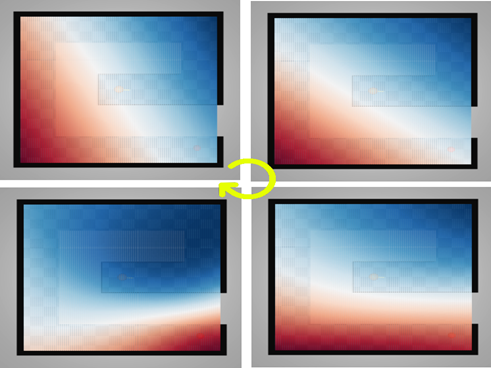
Progression of Value and Reward Landscapes Across Training
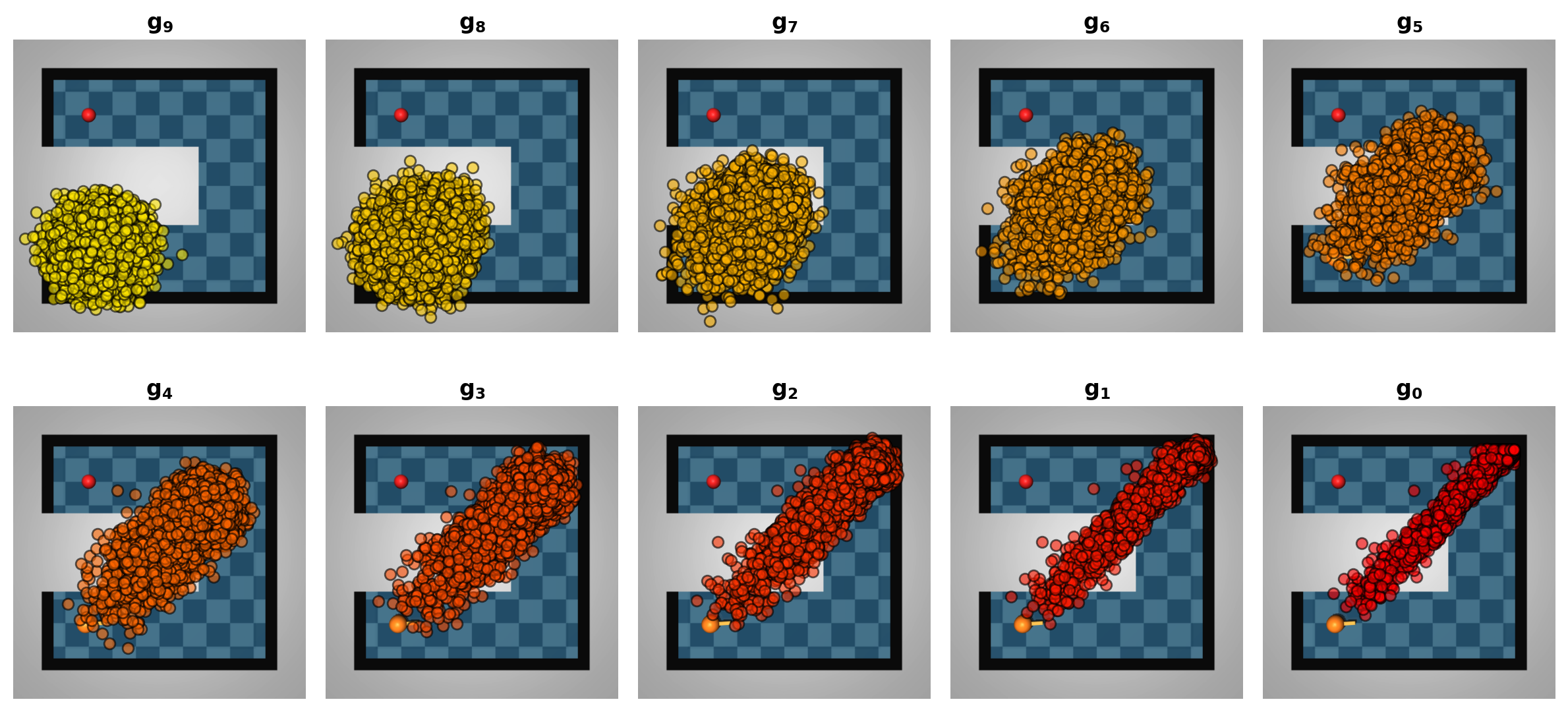
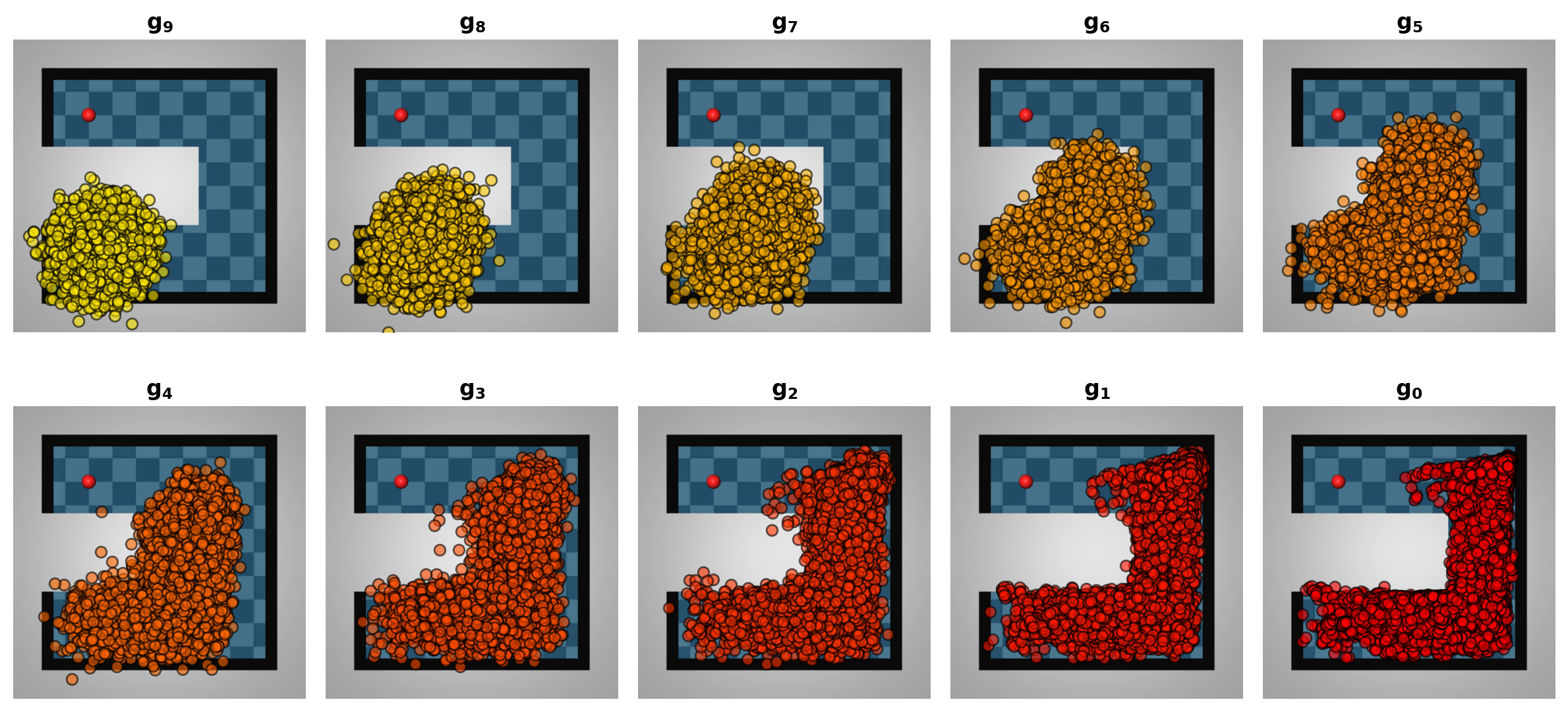
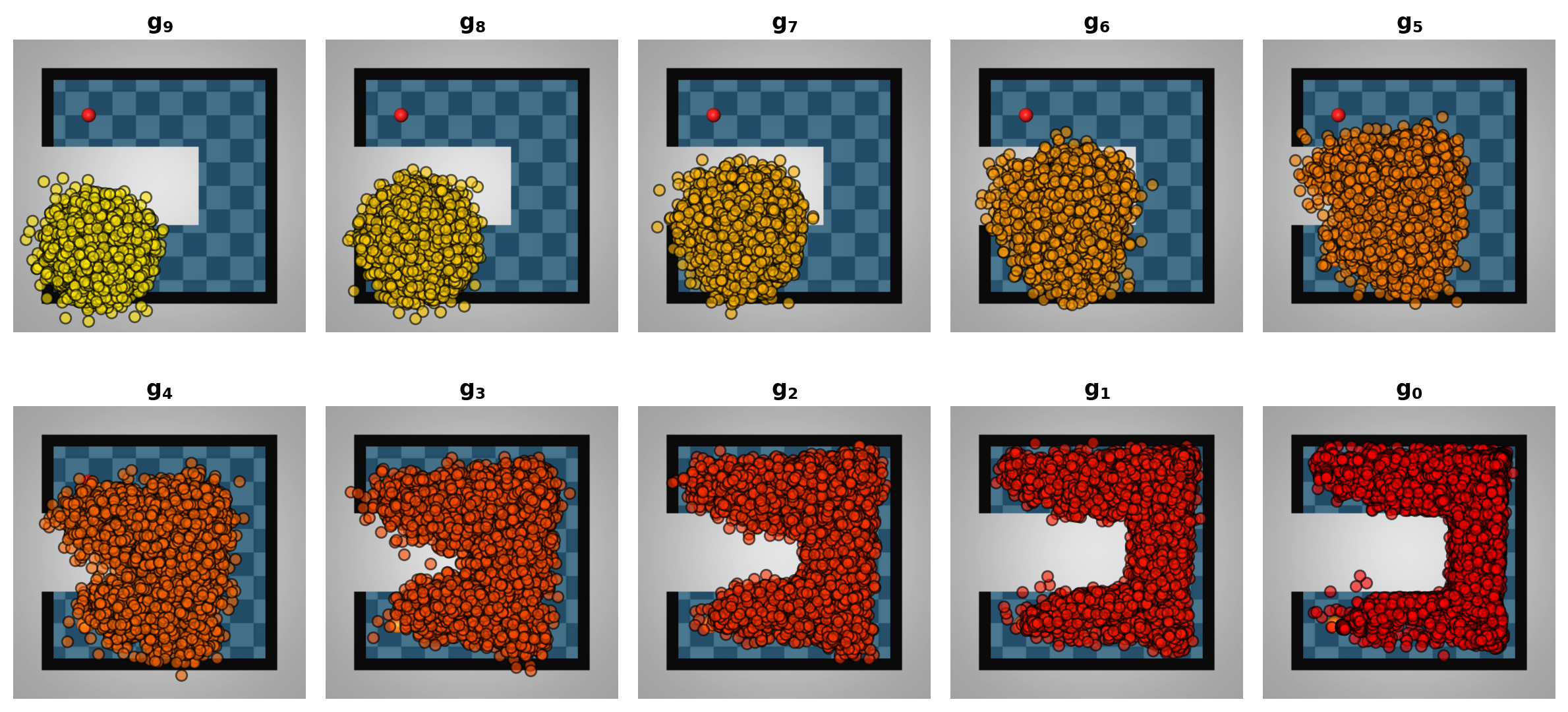
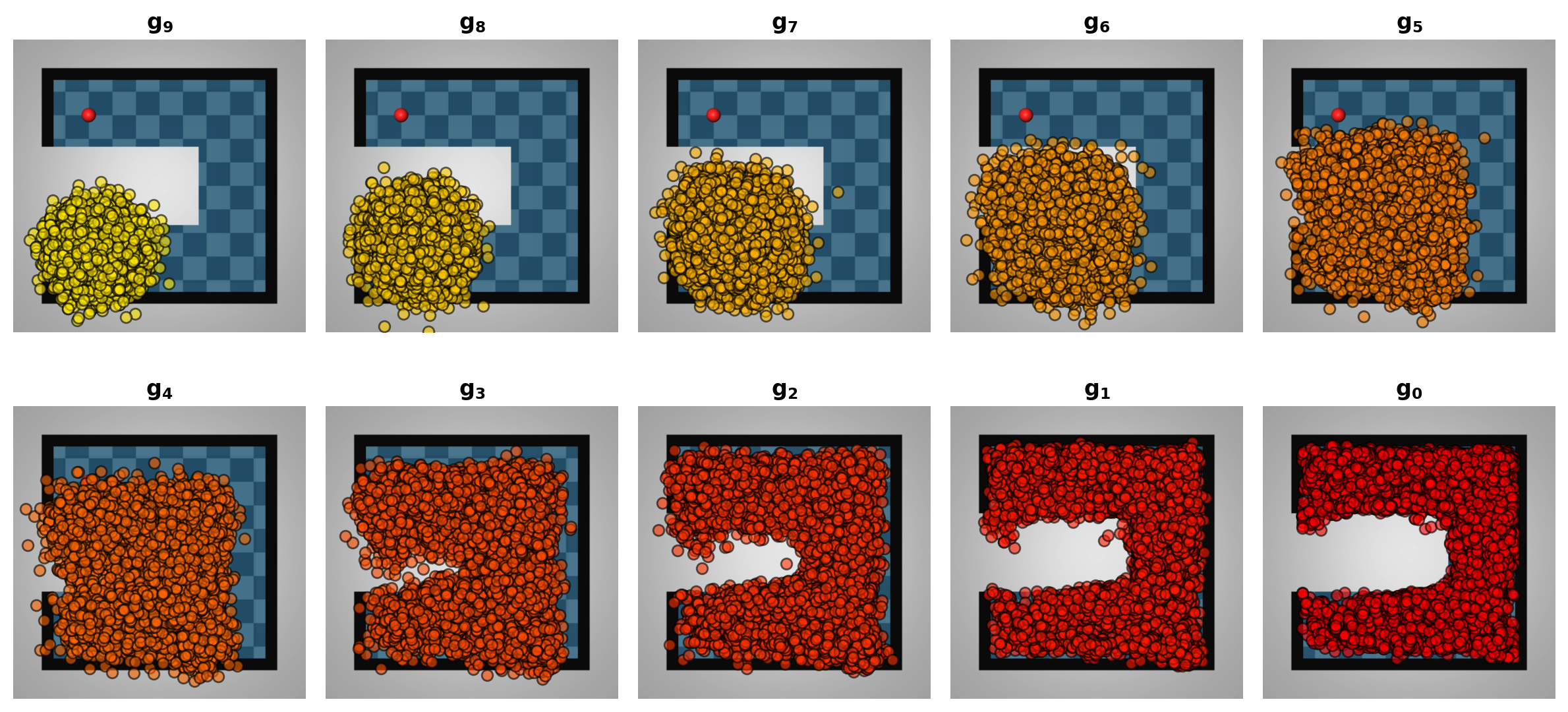
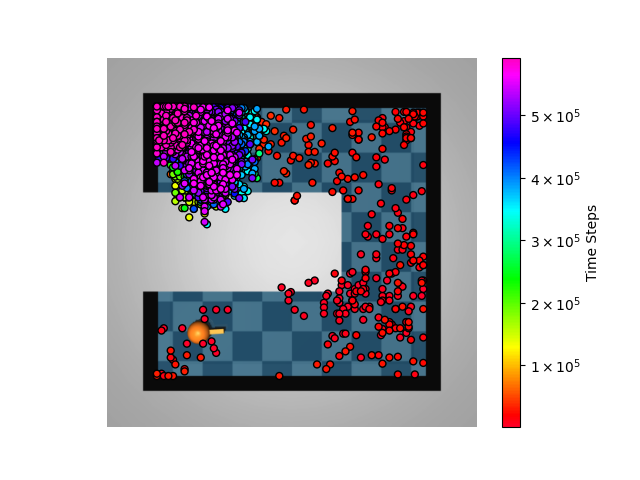
We benchmarked DiCuRL against 9 state-of-the-art CRL algorithms: CURROT, GRADIENT, OUTPACE, HGG, GoalGAN, ALP-GMM, VDS, PLR, and ACL across 3 standard non-convex continuous maze environments.
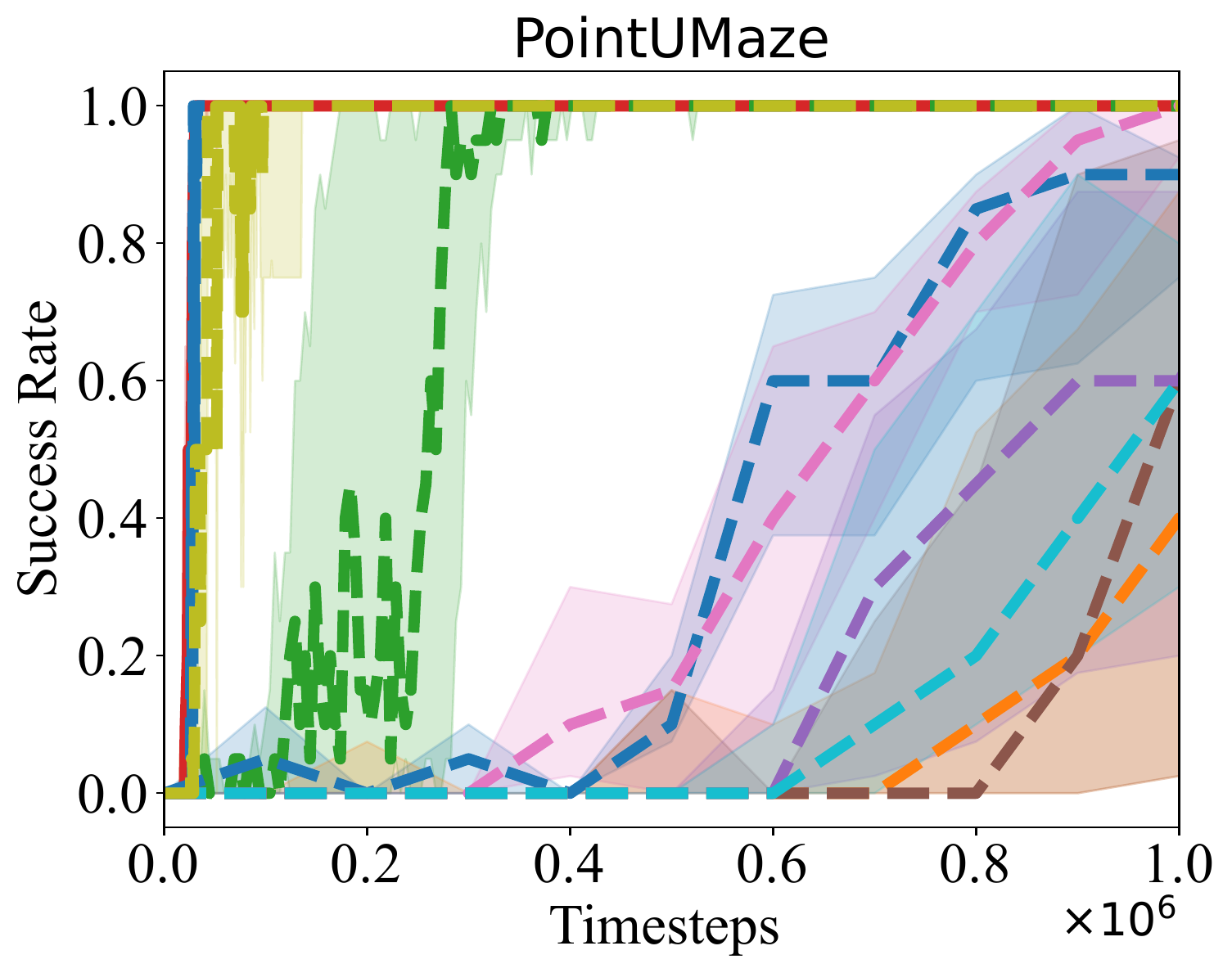
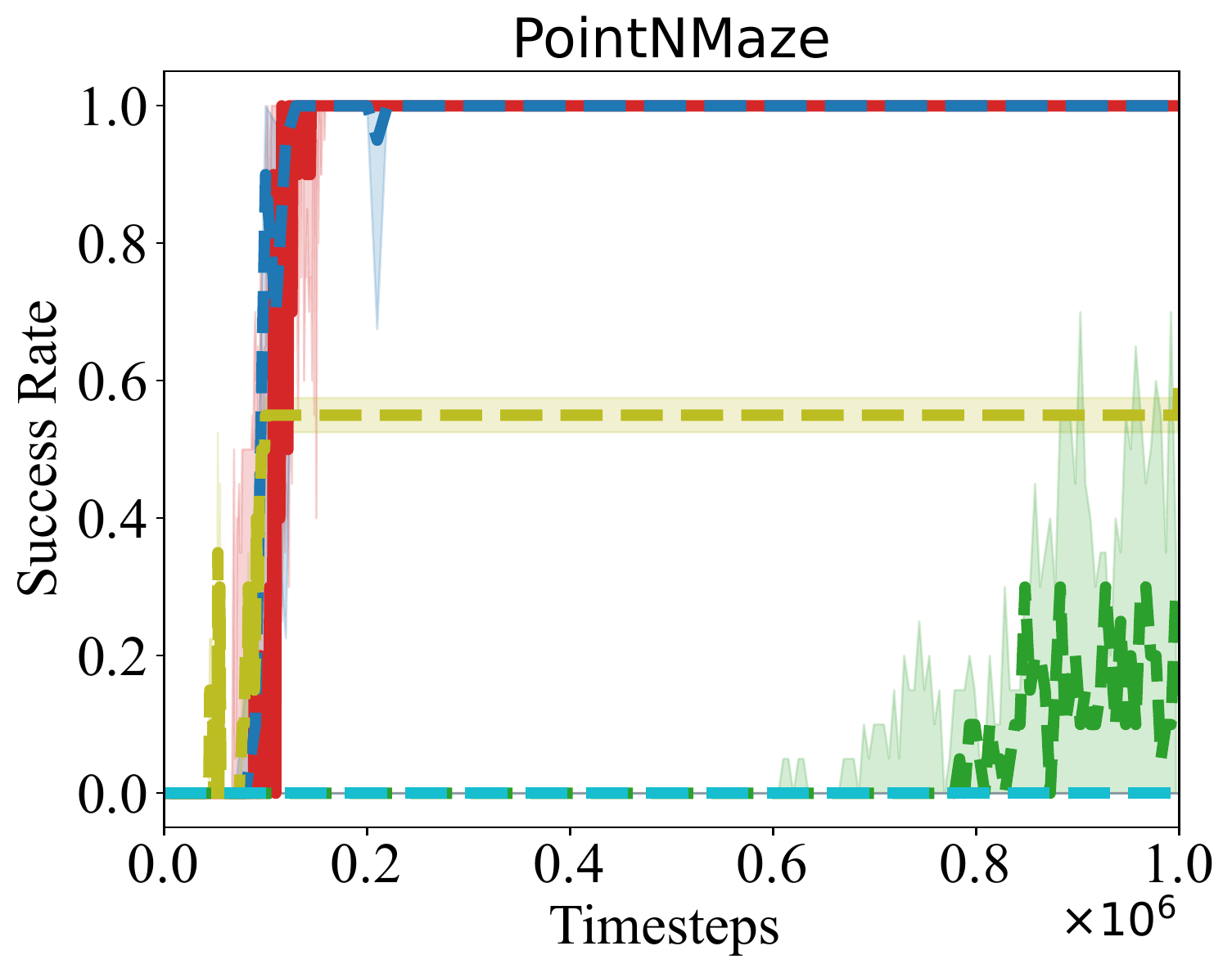
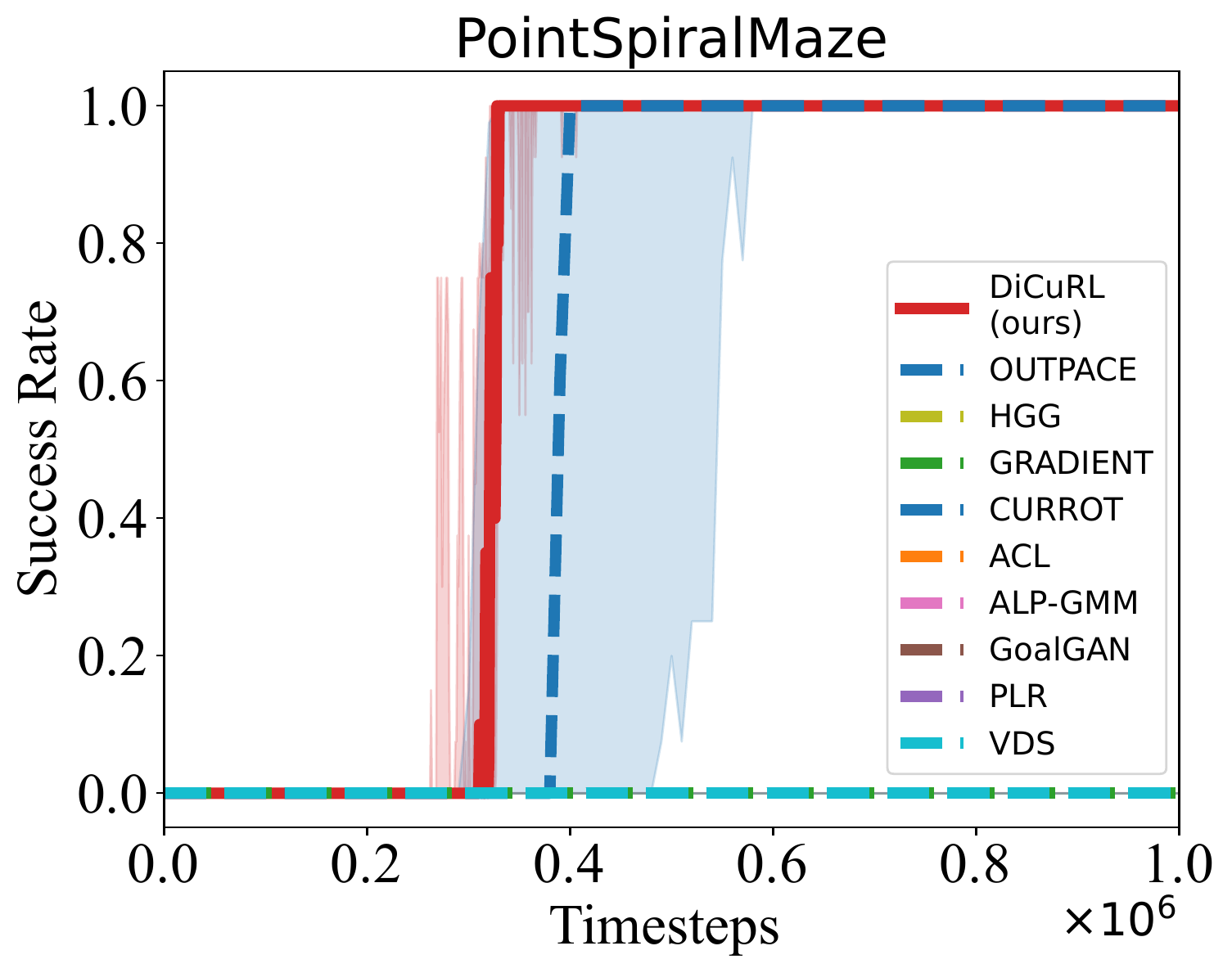
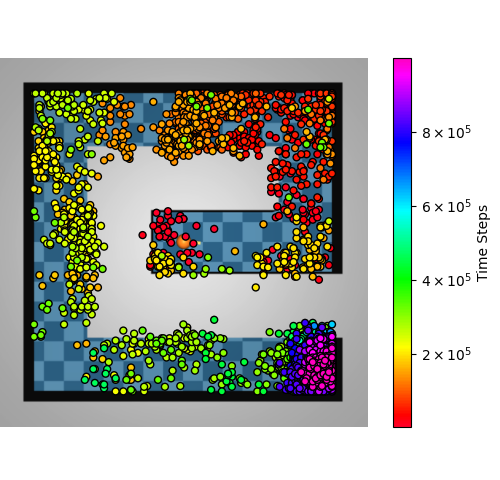
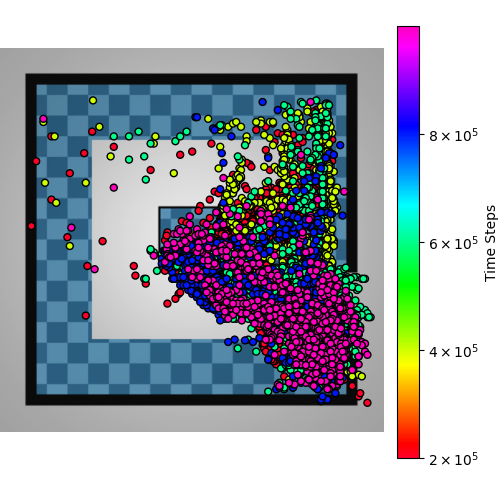
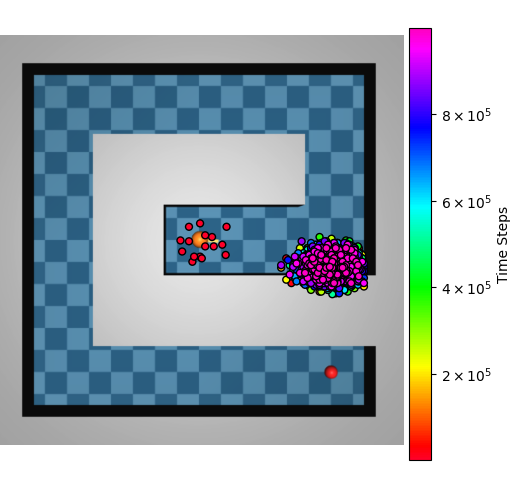
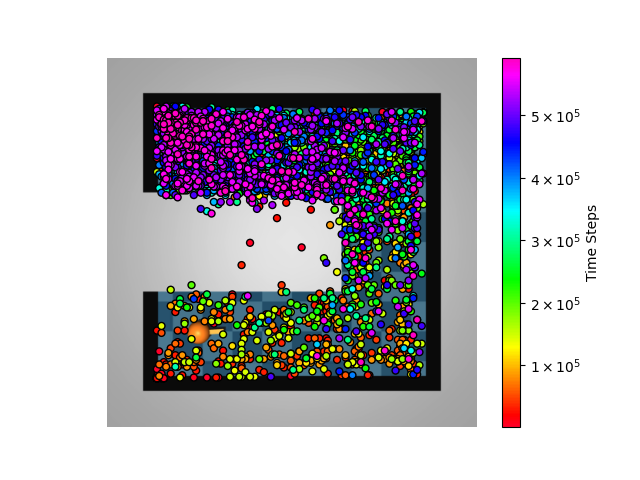
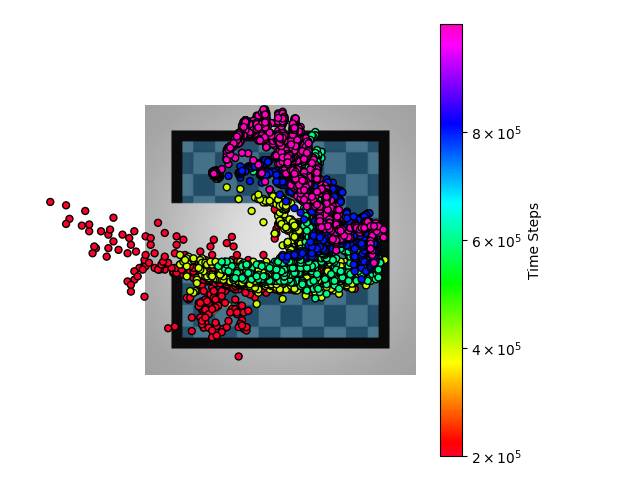
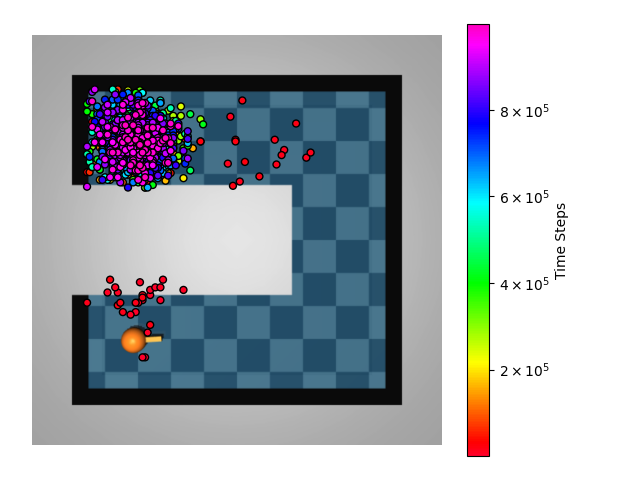
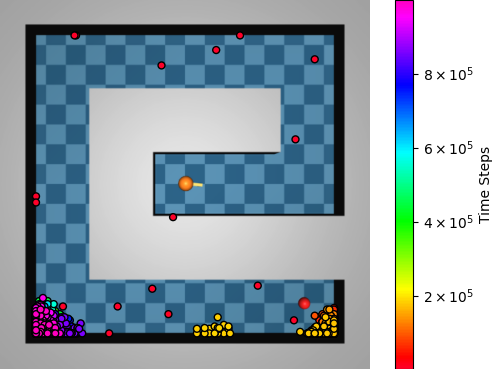
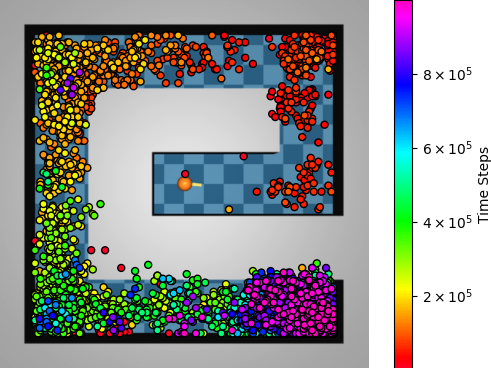
Curriculum Goal Sampling Comparison vs. Baselines
Visual comparison of intermediate goals generated by DiCuRL versus leading baselines. DiCuRL strictly adheres to the passable geometric manifold without attempting invalid shortcuts through walls.
PointSpiralMaze (High-Complexity Barrier)
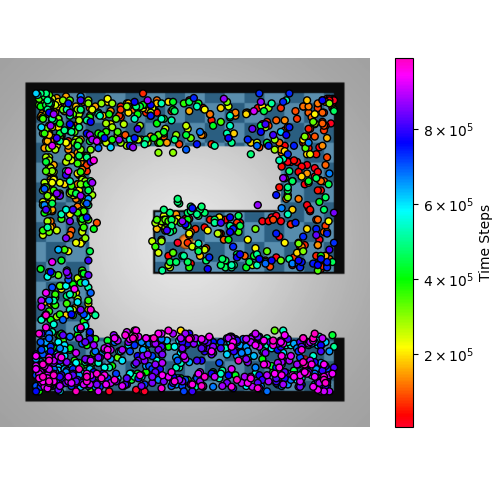
PointUMaze
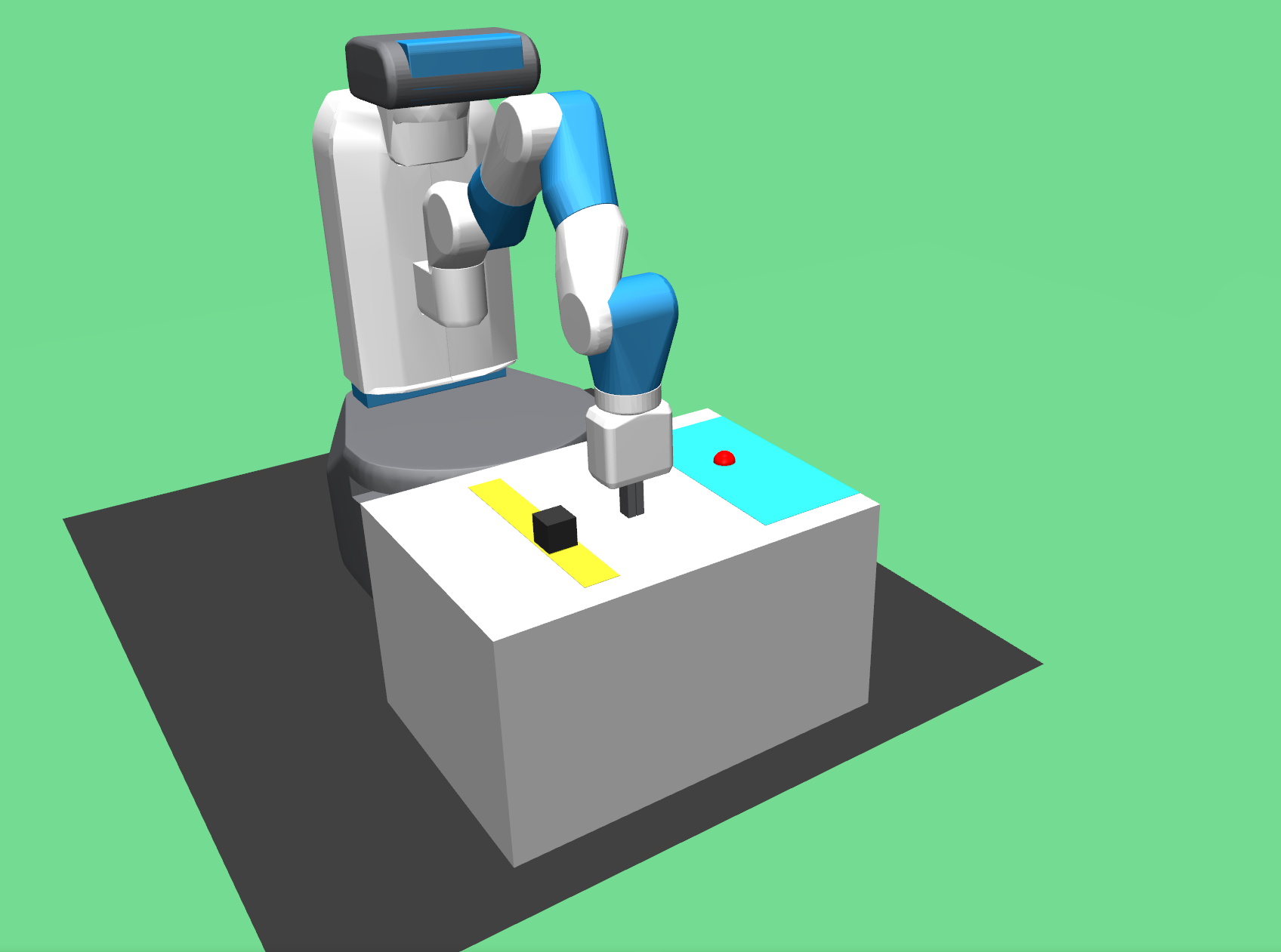
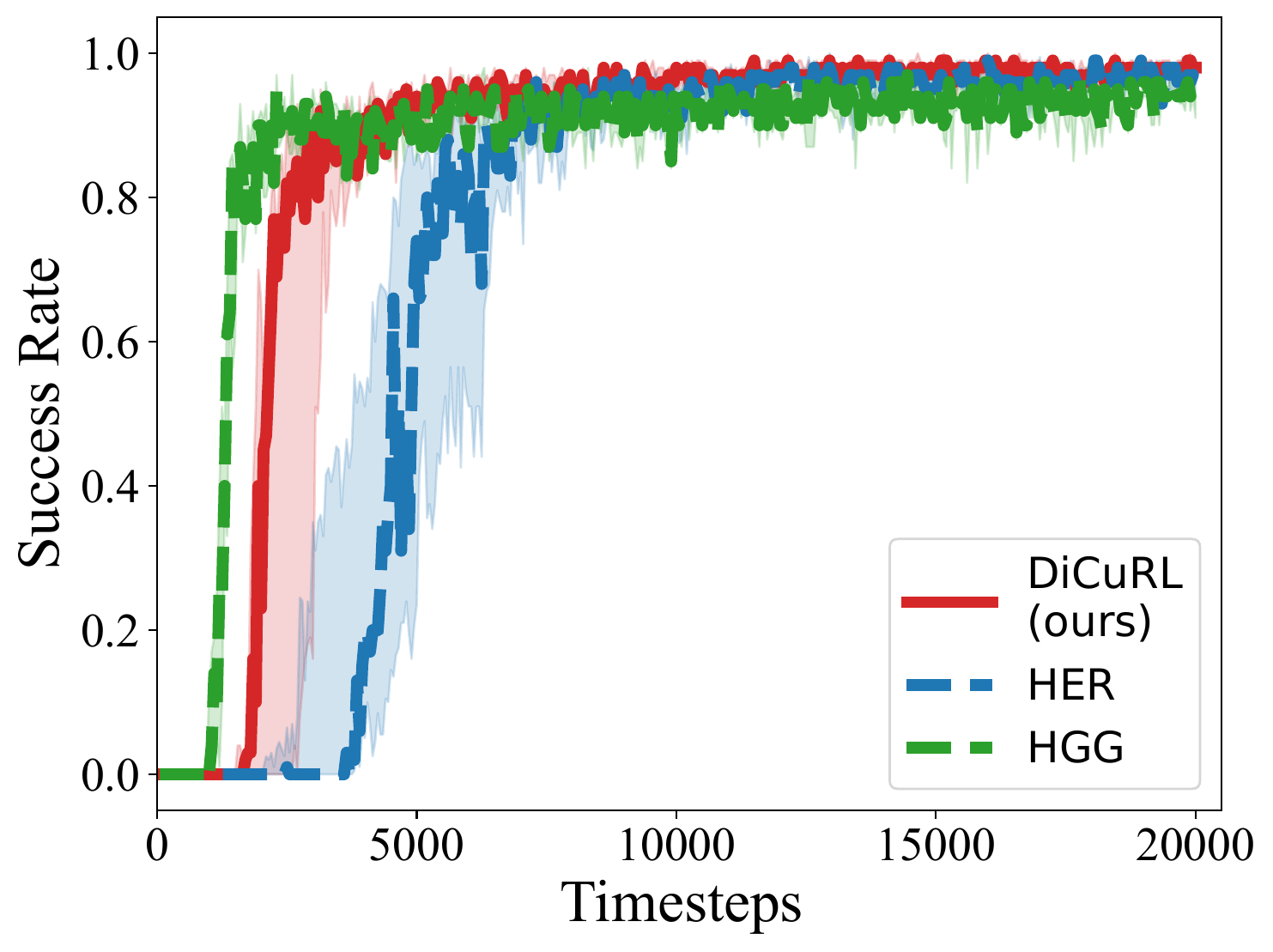
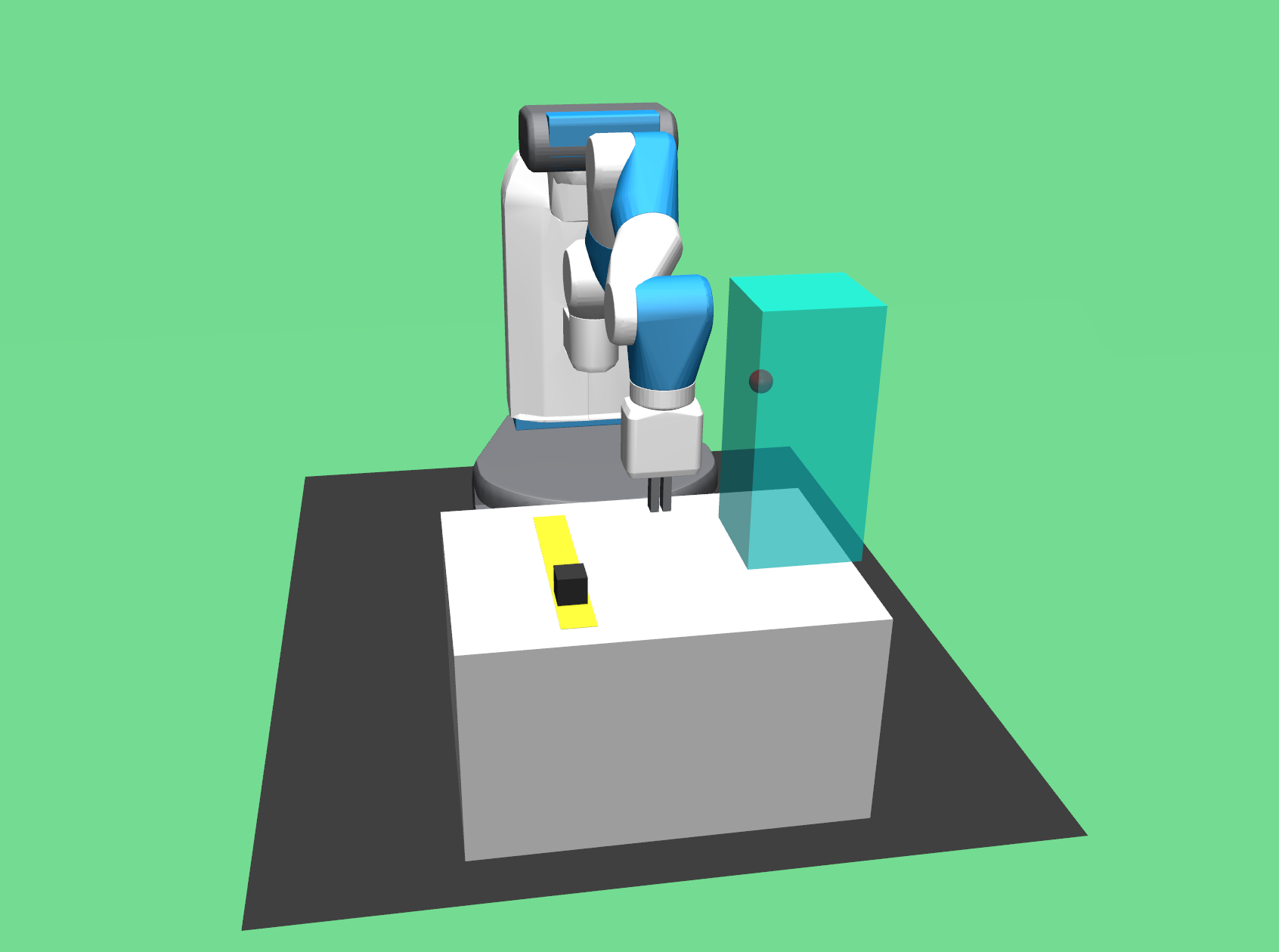
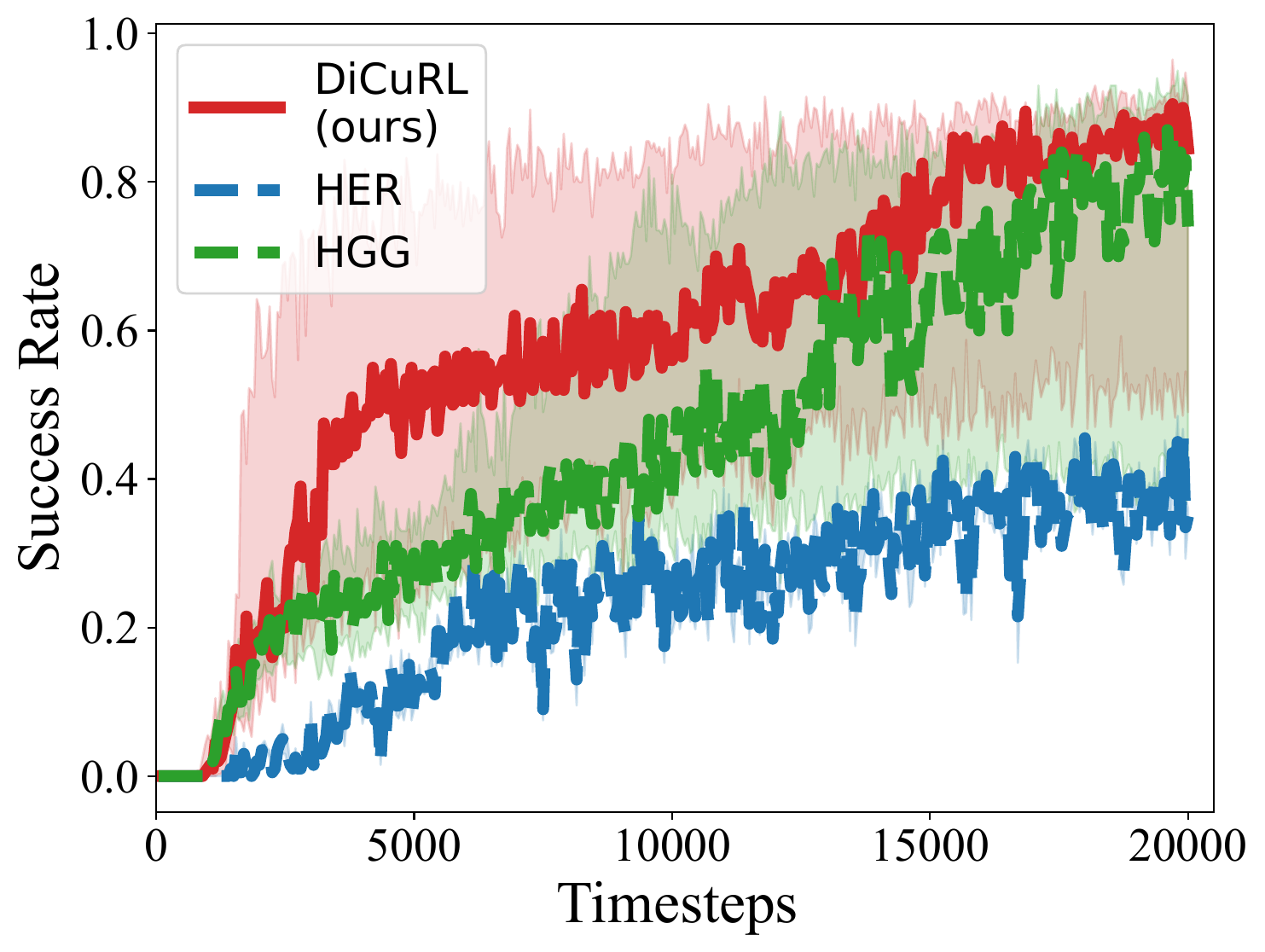
To demonstrate scalability to continuous high-dimensional systems, we integrated DiCuRL into PyTorch DDPG for 7-DOF Fetch manipulator benchmarks with substantially expanded desired goal areas.
@inproceedings{sayar2024diffusion,
  title     = {Diffusion-based Curriculum Reinforcement Learning},
  author    = {Sayar, Erdi and Iacca, Giovanni and Oguz, Ozgur S. and Knoll, Alois},
  booktitle = {Advances in Neural Information Processing Systems (NeurIPS 2024)},
  volume    = {37},
  pages     = {97587--97617},
  year      = {2024},
  doi       = {10.52202/079017-3096},
  url       = {https://proceedings.neurips.cc/paper_files/paper/2024/hash/b0e89a49af1fb2ebea69bfc39df0be4a-Abstract-Conference.html}
}